How it works
One warehouse behind a lot of small shops.
You get the price and the range of a chain, without being in one.
Seven steps, from the first call to a shop that reorders itself.
Pick any one to see what actually happens in it.

We go through your budget, the space, the rent and the return you expect — before anyone spends anything.
Your budgetSite, size and rentThe catchmentReturn you expectYou end up withA straight answer about your location
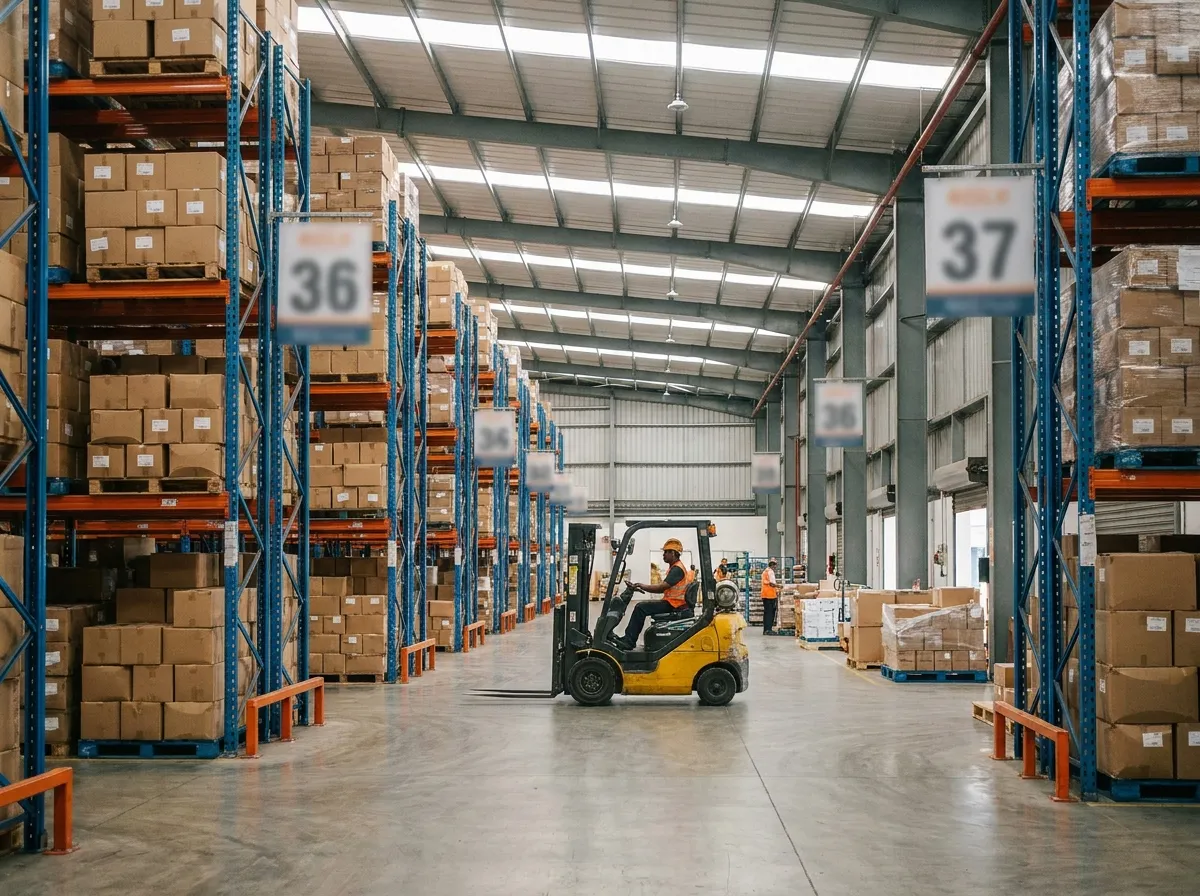
Your stock is already in the country.
A shop importing for itself waits on a container. A shop drawing from a warehouse that already holds the range waits on a lorry.
- Bulk in, cases outWe buy a container; you buy a case. Splitting that is the one thing a single shop cannot do for itself, and it is where the price comes from.
- Priced before it movesEverything is costed in rupees with GST included before it leaves the rack. No landed-cost surprise turns up afterwards.
- One supplier, one invoiceSourcing, import, customs and pricing happen on our side of the line. You order off a price list.
What that means for your cash.
It holds the range before you need it, so a refill is a delivery.
- You never place an import orderWe carry the container risk, the customs and the currency. You order off a price list in rupees, GST included.
- You hold less money on the shelfBecause resupply is a fortnight, not a quarter, you can run a shelf thinner and still never be empty.
- A bad line is our problem tooWe chose it for the catalogue. If it does not move in your shop it is usually not moving in others, and it comes out of the range.

The screen the whole thing runs on.
One login. Rings the sale, drops the stock, tells you what to reorder.
The counter
Cash and UPI, a printed bill, and stock that falls as it sells.
The shelf
What is left, what is short, and what has not moved in a month.
The order
Pick from the catalogue; we apply each supplier's case size.
The money
What you have paid us, what is outstanding, and your balance.
A second shop is not a second system. It is the same login with another shop in it, which is the point at which most people who open one open two.
Where it goes wrong, honestly.
Better you read them now than find out in month four.
A thin catchment
This is a footfall business. If the road does not carry people past your shutter, no amount of stock fixes it.
Wanting to pick every supplier
The price comes from pooled buying. If you want to source your own lines, you do not need us and should not pay us.
Nobody on the floor
You or somebody you trust has to run the counter. This is not a passive investment and we will say so on the call.